Dressing Hillman’s Next Chapter
How A Different World’s costume design carries family history, cultural identity, and a new generation’s growing pains.
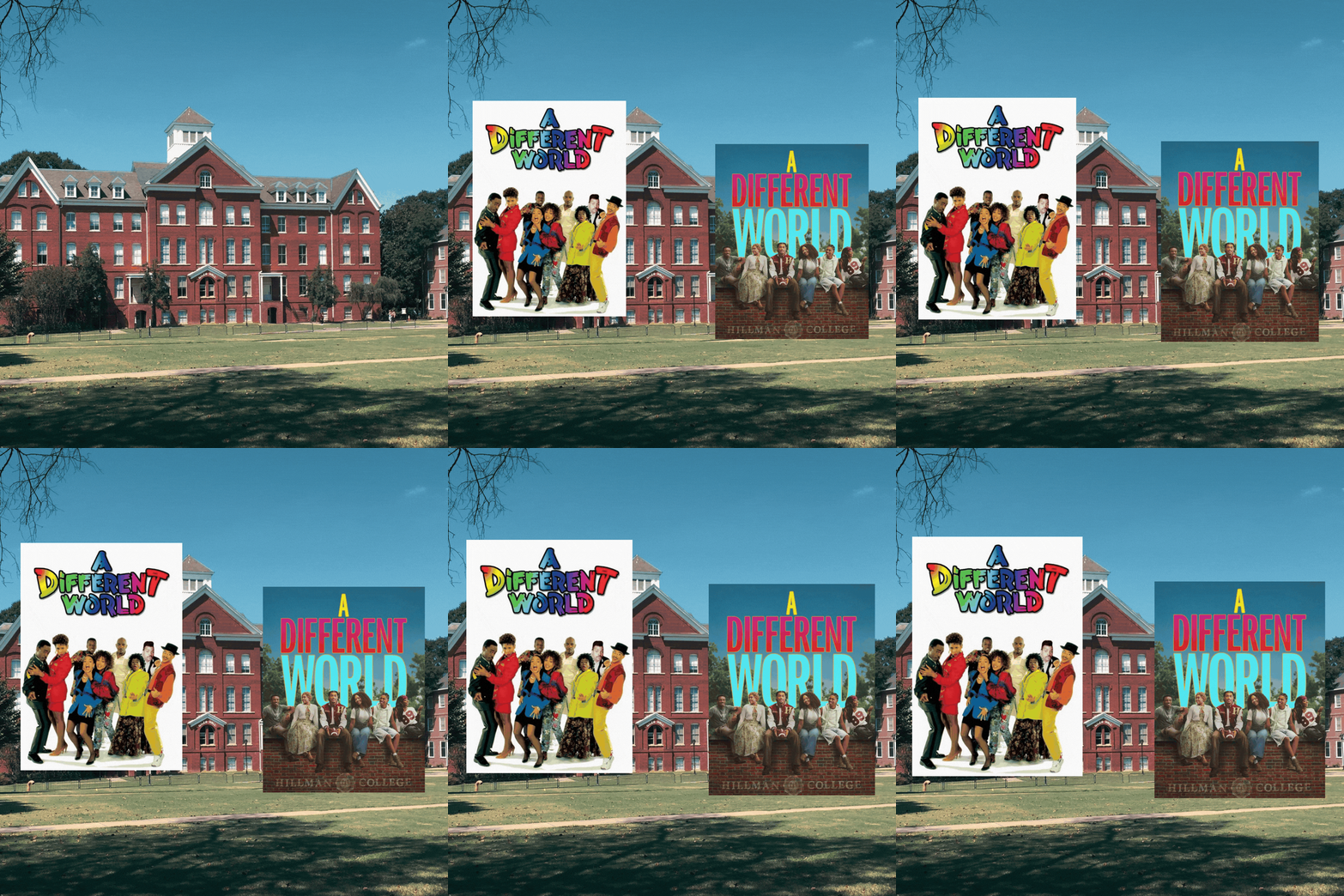
Images courtesy of NBC & Netflix.
For those who haven’t watched, disclaimer: season 1 spoilers ahead.
The Hillman group chat is busy discussing the plot, cast chemistry, and rumored romances. I’m pulling up with production notes on the costume, hair, and makeup choices that brought these characters into focus.
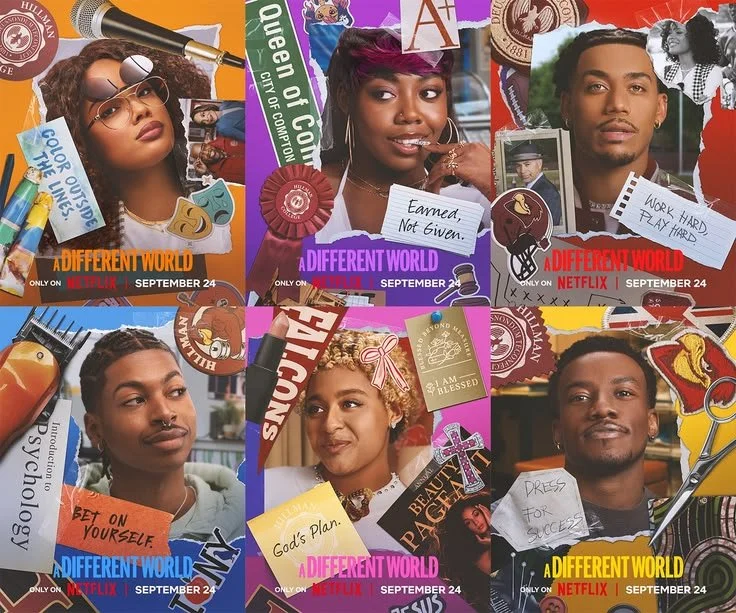
Images courtesy of Netflix.
Let’s set the scene.
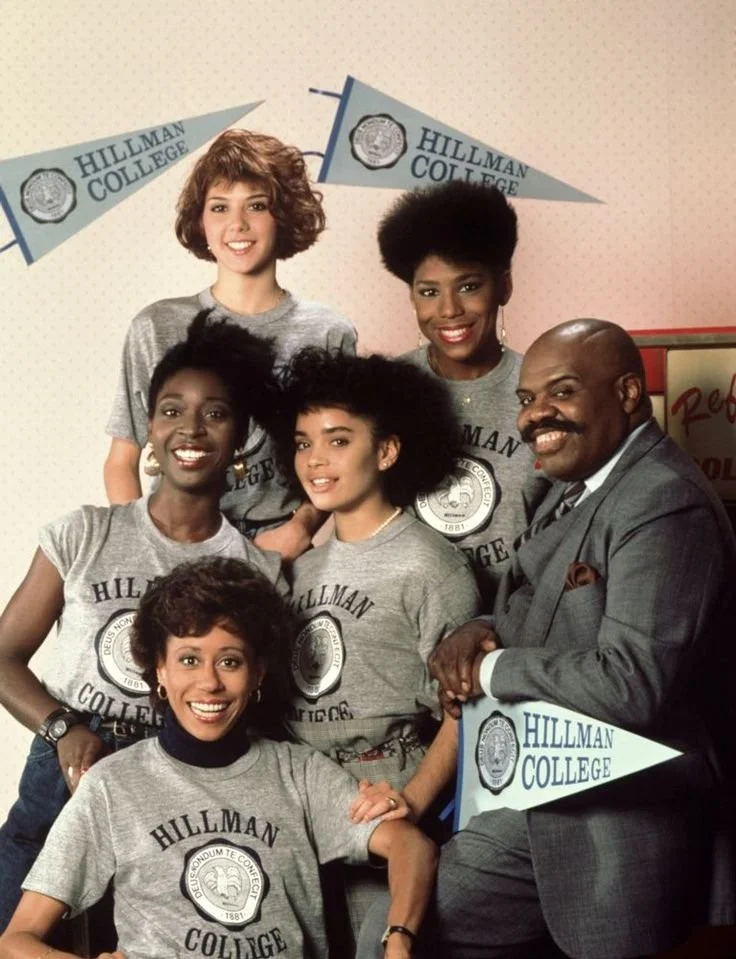
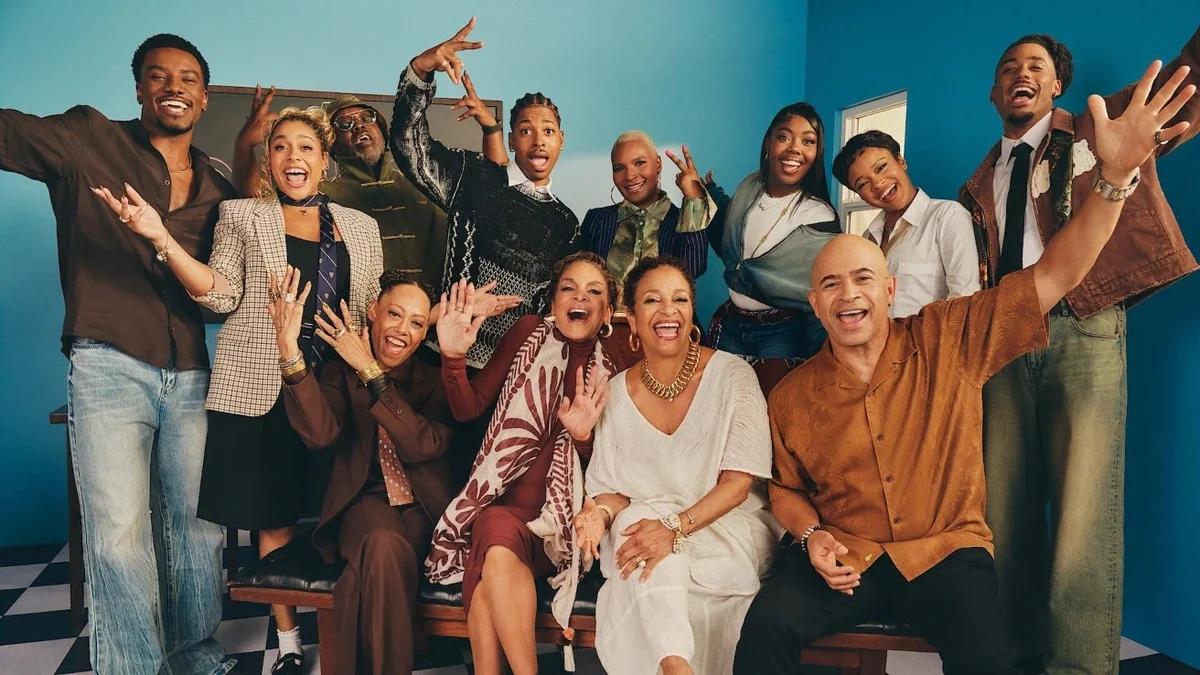
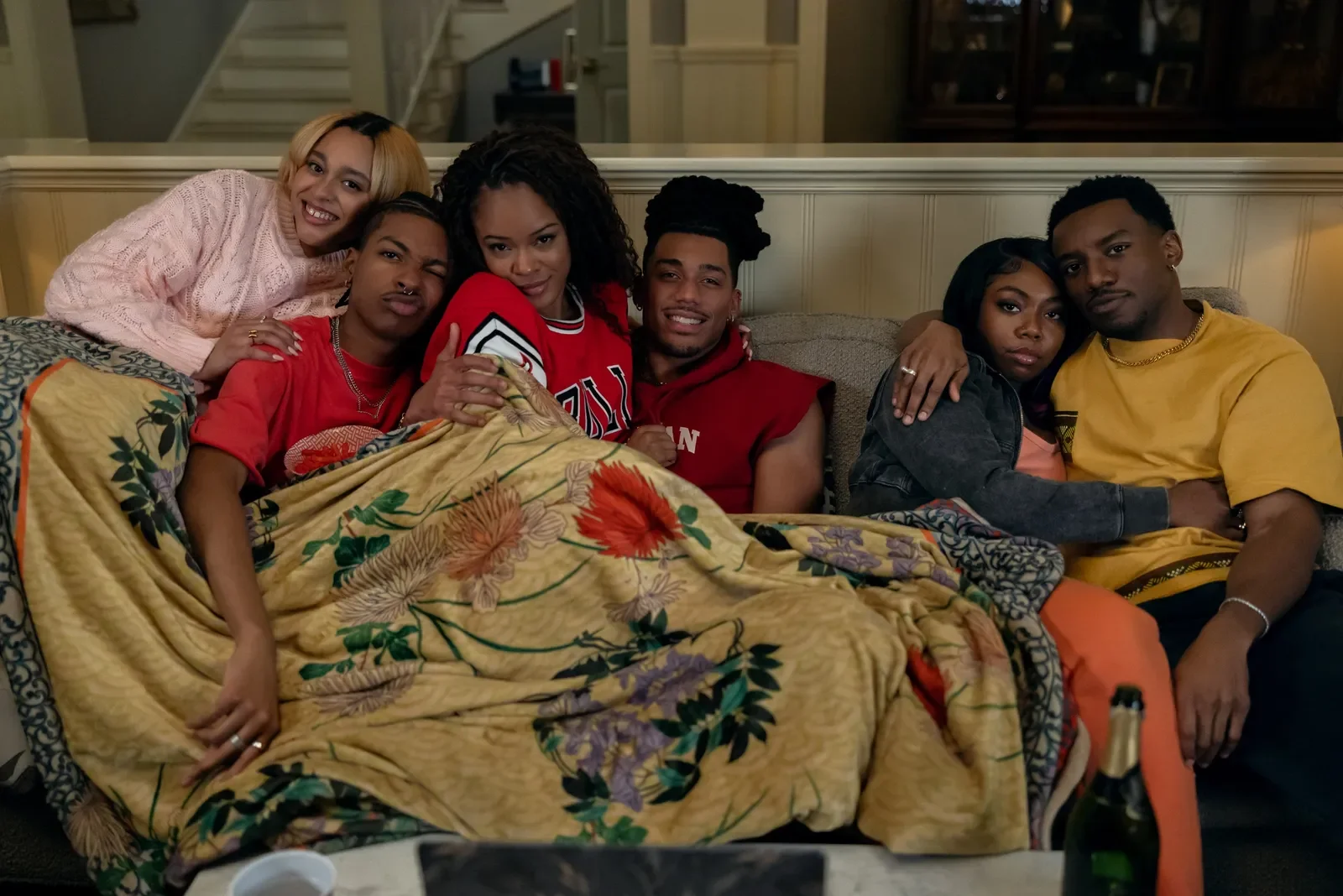
Images courtesy of NBC & Netflix.
It’s been a little over a month since A Different World dropped, 39 years to the date the pilot of the original dropped. This round a Different World returns with an unusually layered wardrobe assignment. We remember the flip-up glasses, the sneakers, the polish, the bohemian layers. Now those memories have to coexist as the marquee characters have matured further into adulthood..parenthood…and grandparenthood—and a new class from a completely different generation emerges and is determined to make an entrance.
The original helped viewers imagine HBCU life and their own place in it. Costume contributed to that invitation: there are several ways to be Black, ambitious, expressive, and brilliant. A Different World was among the catalogue of shows —Martin, Living Single, Fresh Prince—that showed coming of age as a young adult in an ever-changing world can be messy but you can be swaggy and glamorous while doing it.
In a video about choosing material to adapt, showrunner Felicia Pride asks whether she can bring something new while preserving the original’s spirit. That is a useful lens for costume, too. What stays recognizable? What evolves? And how does a daughter (Deborah) that both borrows from her parents’ eclectic taste while coming into her own identity, express herself through her wardrobe? And where is a clash created?
After watching the season, taking notes, and reviewing press coverage, these are the questions and takeaways I keep coming back to.
Disclaimer #2: this isn’t your typical season recap. We are also not fan page sourcing all the pieces featured on the show, nor merely a style review. We sit somewhere in the middle. Because we wear both a costume designer and producer hat in our work, we nerd out about the bridge between those two departments: the translation of a project’s ethos and character archetypes through costume design, hair, and makeup.
Deborah definitely inherited more than her parent’s closets.
Images courtesy of Netflix & Femestella.
Deborah Wayne is that girl. As her looks unfolded throughout the season, she felt like an amalgamation of 90’s baddies with a modern Gen Z twist.
Through her rotation of hair styles and looks, I saw nods to some of the show’s legacy characters (e.g., Kim) as well as some of the 90’s baddies that graced our tv screens and red carpets (e.g., Gina’s pixie from Martin, Regine, Khadijah, and Sinclair’s signature styles from Living Single). Derek J, head of the Hair Department, noted his intentionality in mixing up characters’ hairstyles this season. He noted college girls have a new laid style every week, while also using the switch up in their styles to match their character evolution.
She is also a nepo baby and it shows. (…Like aside from wearing Balmain to her first college dorm party, am I only one who noticed this child wore a Thom Browne button up to work in The Pit!?…) While she does not lead with that in her outer appearance intentionally, during the season, when she gets in a bind, we see her naivety and privileged upbringing get her into trouble as she tries to use her parental ties to get her out of sticky situations (e.g., missing curfew, making financial aid demands). She carries her dad’s leadership qualities and her mom’s unyielding confidence and determination.
Just like her actions, Deborah’s wardrobe is also a clear nod to her parents. Her ability to flow between preppy and laidback streetwear are a nod to her father Dwayne while her embellishment, polish, and extravagance in other moments suggest the influence her mother Whitley’s style has had on her.
The Bulls jersey and her dad’s flip up glasses were an especially satisfying connection. In two recent interviews, Costume Designer Provi Fulp confirms that jersey callback was intentional, while also identifying Deborah’s mink as a reference to her mother. I love the idea of these recognizable pieces passing between generations.
At the same time, her mix of prep, relaxed denim, sparkle, and elevated textures suggests a young woman trying on versions of herself. Like some of the other characters in this class and the legacy characters too, she sometimes speaks before she thinks. And that gets her into trouble. But she also shows herself as a torchbearer. What starts as an involuntary stint at Hillman caused by a few wrong choices, and a messy, unfocused, rebellious, but brilliant spirit, evolves into a young lady who embraces her inner maverick to advocate for herself and others even when it causes friction with her parents—who double as Hillman administrators.
Therefore, Deborah’s gala look carried the bold, eclectic energy we’d come to expect from her. The florals, tulle, shine, tiara, and necklace each expressed her appetite for drama; however, all together, they drew my attention away from the significance of the moment. I would have loved to see one element take the lead, allowing that exuberance to frame her presence as she entered the room.
The maroon and light pink gloved top looks offered a similar sense of experimentation and baddie aura that matched her personality. In the maroon ensemble, the glove openings and odd-fitting sleeves and chest/shoulder area became a strong visual focal point, pulling my eye from the sweet exchanges between Deborah and her two romantic interests. On the quad, the cropped sweater with attached gloves, the bralette, and cropped fur brought several expressive ideas into one outfit. That abundance felt true to a young woman trying on different versions of herself, though a little more breathing room between the details might have allowed both her personality and the scene to come through more clearly.
A freshman can absolutely have an unsettled style. I found her varied style to be a nice foreshadow to the fact that she applied to become an independent studies major. Our neurodivergent diva is a creative afterall. For season two, I am curious to see what she carries forward as she settles into who she is outside of Dwayne and Whitley’s daughter, quasi-retired (?) party girl, and Shaquille’s on-again-off-again girlfriend. I would love to see her continue to mix the new and the old and the street and the luxury. I loved her proportion play: cropped with a high-waist, fitted with a baggy moment, etc. Knowing her mom had the flyest closet at Hillman, I would love to see her in vintage pieces mixed in with modern pieces, especially customized or upcycled archival pieces in the next chapter.
Rashida came to study; and her character is worth studying.
Images courtesy of Netflix & Femestella.
From the opening moments of the show, we find a young woman who has moved across country —from Compton, CA— on a mission. She is focused. She is a hustler. She is self-driven and no nonsense. When her financial aid becomes in jeopardy, she snaps immediately into fix it mode and finds work at the Pit. She worked hard to get to Hillman and has a family at home depending on her and cheering her on from afar. With a bit of the grassroots activism flare you would expect from a west coast native, she keeps her head down but will advocate for herself and others if provoked.
She is girly, but she is tomboyish too. And that’s where we see her unserious side come out. She shares that she loves playing with her brothers, and we see it again when she nerds out about anime with Andre.
Like Kojo, she’s in a different world—and that’s probably why they bond and he brings out her softer romantic side. But her street smarts are what drive her to always have a plan B and cut people and situations off when they feel like a distraction from her goals. She has similar qualities to Kim from the original class but also the wit and grit of Pam from Martin: her mom—the surprise Black tv crossover the producers brought us in this cast.
She is multi-faceted, and her wardrobe is a reflection of all of those aspects of her identity. She presents as shy and introverted initially, but her clothes, accessories, hair, and glossed lips clearly offer a way to express herself more boldly. Also we love a good nail set, and apparently Rashida does too. Rashida’s wardrobe has a confident visual language: fitted silhouettes, cropped proportions, sporty references, and an affinity for purple. From her Baby Phat and embellished sweatsuits to her body-conscious ensembles, it all feels fitting for a character whose academic ambition, street smarts, and sensuality comfortably share space.
Her purple talent-show look brings those signatures into one expressive moment, with the color moving from her hair into the ombré dress. Purple is her power color (and a color of significance in the Black hair care space more broadly) so a head-to-treatment in it for one of her defining moments for the season makes sense; especially after the easter egging Derek J did with it in her hair throughout the season.
Together, costume and hair give her room to experiment while preserving something immediately recognizable. That color continuity mirrors her broader visual identity throughout the season. Rashida knows how to switch it up and still be entirely herself.
Hazel gives church girl letting her hair down.
Images courtesy of Netflix, Femestella, & cast.
At the beginning of the season, we encounter a church girl who is holier than thou and super bubbly. Her girly, feminine, and modest clothing match that upbringing.
Hazel’s bows become more interesting when you follow her character arc. In an interview with Bloom and Tea, Fulp confirms that the bows expanded in size throughout the season, as a recurring motif tracking her path to pageantry. Pagentry was a way to for a sanctified young lady who grew up under strict doctrines to explore visibility and glamour—and more broadly her womandhood— within a world that still felt compatible with her values.
As she navigates dating (tea: two men apparently!), friendships, pageantry, and life away from home, the messiness of it all leads her to dissolve the holier than thou aura. Ironically, as she gets closer to the spotlight and is crowned Miss Gilbert Hall, things stop being so perfect, so black and white. Therefore, for season two, I would keep watching how Hazel’s season 1 signatures—bows, pageant sashes, feminine silhouettes—and her personal style evolves alongside the young lady she is becoming.
Kojo’s finding his place in a new world—and designing one of his own.
Images courtesy of Netflix, Femestella, & cast.
Kojo’s clothes caught my eye before I knew how much thought had gone into the line he creates.
Fulp names Virgil Abloh as a reference for Kojo’s design ambitions. She also explains that the fictional Chop Lyfe line draws on Kojo’s Ghanaian, Nigerian, and British background, with its identity extending across garments he wears and Hillman merch drops.
The branded apron, hoodie, and runway pieces featured in the show let us see a creative using clothes as a medium to celebrate the many facets of his identity. This becomes particularly important when his parents come in town during Homecoming and see the fashion show. True to the identify of the show, he comes into his identity confidently as a result of being at Hillman. He decides to lean into his chosen path as a designer rather than conceal that from his parents. His character arc serves as a reminder to viewers to follow your calling despite external pressures.
One note about his fashion show look: the mud cloth vest/bomber jacket was a strong statement piece. Though I love the pushing of boundaries, I would have removed the zip up sitting underneath so the overcoat had its moment to shine.
For season two, I’d love to see Kojo bring more of his design ambition to the game-day merch—extending the personality of the Chop Lyfe pieces he personally wears into bolder graphics, unexpected proportions, and considered details. With Virgil Abloh as a reference for his character, there is an exciting opportunity for those pieces to feel like an emerging designer’s take on collegiate wear, with some of the inventive spirit of Off-White and other contemporary menswear brands (e.g., Denim Tears, Rhude, Kith, Aimé Leon Dore).
I will continue to lean in to see what Kojo designs and wears in Season 2. His closet and design sensibility is my favorite so far.
Shaquille’s dressed like a future first-round draft pick—and every appearance on campus is his tunnel walk.
Images courtesy of Netflix, Femestella, & cast.
The whole season we find people questioning why he’s at Hillman and how soon he is going to leave for bigger programs with bigger budgets where his opportunities and visibility will be greater. Is he the big fish in the small pond? Is he larger than life? Is he too good for Hillman’s program? I appreciate him rebutting those questions at every turn because it is valuable for this generation to see a character advocating for the unique experience of being an athlete at an HBCU. (Although we got a plot twist at the end of Season 1 that he may be tired of fielding those questions….) Shaquille’s wardrobe carries the confidence of a (five) star athlete accustomed to being noticed.
Sporty silhouettes, varsity references, diamonds, chains, and designer touches give him a flashy, polished presence that—similar to Deborah also feels like a nod to his own dad. Ron was known for his taste and dressing well back in the day. How he carries himself suggests someone arriving at Hillman who is larger than life. Not unlike his dad, he sometimes speaks first and thinks later and suffers the repercussions of that. But I found that to be on brand with an athlete on the rise who is growing and maturing before our eyes.
My favorite moments were when that athletic vocabulary became more tailored. His look for Congresswoman James’ student brunch, for example. The combination of a button-down, roomy trousers, and a varsity jacket was the right balance of sporty meets formal for the occasion. And via his gala tux, worn without a shirt, we got to see that confidence and swagger extended into evening wear look. Across both, the appeal was seeing how his personality translated across various settings.
Amir comfortably and pridefully lives in his truth.
Images courtesy of Netflix, Femestella, & cast.
In Amir, we find Harlem native who, true to that upbringing, is pragmatic and direct. Like Rashida, we see his resilience and his hustle. In college, his parolee status from his stint with the juvenile detention system haunts him. But rather than let it consume his identity, we see his drive to turn his life around through both his commitment to his studies and his role as the resident in-dorm barber for the guys. He’s also the wise sage in his friend group, often dropping gems that are impactful for his peers despite battling his own personal turmoils. Although, ironically, we see him stumble too as he navigates his freshman year of college; finding himself in an entanglement with his best friend Hazel and her boyfriend Jalen.
Amir’s style is reflective of his dynamic background. Amir’s wardrobe moves comfortably between grounded streetwear and more revealing, expressive pieces. Relaxed proportions, statement designer touches, and a hint of grunge give him an ease that feels distinct within the group. His clothes can draw attention without making every entrance feel like a performance.
His costume design and hair choices, mirror the intentional choices the production team made to broaden the horizons on what a queer character could look like. This is important—both for the show’s physical contextual setting (an HBCU) and at a higher-level for queer representation in media. Provi confirms that range was intentional: his Harlem background and sexuality are parts of a fuller identity, with room for Timbs alongside a sheer top. In doing so, the production team gave him freedom to shift how he presents himself in the world, which in turn offers that same invitation to viewers.
Dwayne: higher learning, higher office, same sneaker rotation.
Images courtesy of Netflix, NBC, & Smoke Center.
Dwayne Cleofis Wayne arguably underwent one of the most drastic and laudable transformations in tv sitcom history. In 1987, we met the brilliant but nerdy math and science whiz and campus jokester who awkwardly chased unrequited love. When the show sunsetted in 1993, we witnessed a grounded academic, mature mentor to the next generation of Hillmanites, and devoted husband to Whitley.
That evolution tracked in his style. His freshmen year, this nerd next door from Brooklyn had a style that was characterized by oversized sweaters, loud patterns, and his now iconic flip-up glasses. By the time the series came to a close, Dwayne’s style had evolved to be polished, professional, and mature. His style leaned into 90s professor chic as his glasses were paired with clean-cut menswear. Across the show’s run, he went from cringe to swaggy upperclassman to Mr. GQ.
Fast forward to 2026, we know he has come back from his stint at Kinishewa Electronics. And quite quickly this season, he transitions from provost to interim president as the school’s financials are embroiled in scandal. And as he navigates his new role, his character traits of being methodical and a peacemaker remain; much to the freshmen’s class’ frustration when their money is funny. His personal life has also unraveled a bit: we also find out early on that distance has grown between him and Whitley leading to their separation. But dropping their youngest (and the problem child) Deborah off at their alma mater creates a vessel for reconciliation. However, safe to say, things are a bit messy for Dwayne and it’s taken a toll on him.
Nonetheless, across that 39 year gap, what I expected to translate was his style; though in a more evolved form. I love that Provi and team kept the sneakers in rotation even as he takes on serious responsibility. The costume challenge becomes showing how his personal style has matured alongside him.
In some earlier combinations this season, the layered tees and more outdoorsy pieces made his institutional role less immediately apparent. He was thrust into this role so I have to give him some grace. In the latter episodes of this season, the button-ups, knitwear, and blazers brought that balance into focus for me, suggesting authority without losing his ease. In short: a man who lived in Japan and was a tech exec would be dressed to the nines.
For season 2, I would love to see the clothes paired with his sneakers balance the sense of style from his youth alongside the experience and responsibility of the modern day man wearing them. However, if we are going to lean into all eras of Dwayne—which would be a mix of professor chic and street—I would expect his style to look how he did for Netflix’s own 10/7 article by Micaiah Carter. Style muses for him, then, might be men who move seamlessly between a sporty suit, a smart casual, and hype beast look: former President Obama, Idris Elba, Mahershala Ali, Andre 3000, Michael B Jordan, LeBron James, and Dwayne Wade.
Whitley: She built an empire. Of course she should dress the part.
Images courtesy of Netflix, IMDb, & cast.
Similar to her husband, Whitley underwent a significant transformation thanks to her time at Hillman. She came in focused on her social life and her “MRS degreee” and emerged with a broadened world view, loads of personal and intellectual growth, and true authentic romance with her college sweetheart Dwayne. What remained constant was her taste. The wealthy southern belle was the designer and quiet luxury queen well before the latter term had been coined.
Whitley’s wardrobe has decades of taste—and a beauty empire—behind it. Like Rashida’s purple hair, her recurring Chanel brooch made sense. Her butter-yellow suit, blue ensembles, and gala gown were among my favorite expressions of that history: polished, assured, and entirely comfortable being noticed. The blue satin draping and brightly colored suiting were particularly beautiful against her skin tone.
Provi’s account of collaborating with Jasmine Guy adds useful context to that evolution. Expanding beyond Whitley’s familiar traditional suits meant finding additional ways to carry her taste forward, including jewelry, tailoring, and eveningwear. (Side note: I did however, love Whitney and Debroah’s shared white Chanel suit looks for convocation. It was a full circle moment, with Whitney’s constant clashing with her mother paralleling her and Deborah’s dynamic; Gilbert woman are more alike in more ways than they would like to admit.)
My season-two wish is for Queen Gilbert-Wayne to saunter around in the designer wardrobe she deserves. Choices made in season 1 can continue: a deliberate neckline, an elegant proportion, or the way a layer sits can convey the discernment we associate with her. Whitley has evolved; I want to keep seeing the meticulous eye that makes her Whitley. Some easter eggs to some of her iconic looks—refreshed to match modern silhouettes— should also continue to make comebacks.
Familiar faces can choose different clothes as they evolve, but should they?
Images courtesy of Netflix, IMDb, & Entertainment Weekly.
The interviews about legacy-cast costume design changed how I initially read some quieter decisions I noticed while I watched. Fulp describes conversations and fittings in which legacy cast members entrusted her to try new colors, proportions, and combinations.
Ron dresses like a man who enjoys being recognized—and has the wardrobe to make sure it happens. His tailoring, expressive accessories, and polished combinations carry the flashy confidence we remember into his life as a successful businessman and an athlete’s father. When we met Ron in the original series, he was a self-described playboy, slacker, partier, and wisecracker. The son a car salesman, he was mixy and slyly charismatic. Provi describes him as a dandy, pointing to the Gucci tie in his introduction as an early signal of his taste. That attention to presentation also creates a visual connection with Shaquille: father and son both understand the power of an entrance, even as Ron’s suiting and Shaquille’s sporty polish give them different ways to make one.
Freddie’s wardrobe retains her bohemian individuality that made her iconic: a young woman who was deeply spiritual, heavily invested in astrology, and passionate about animal rights and environmental activism. Through expressive jewelry, vintage elements, and richly detailed pieces we see her core character traits translating as she has evolved into professor, university trustee, and mentor to this new class. Provi’s use of vintage finds and locally designed jewelry helped translate her familiar sensibility: she’s grown, accomplished, but still unmistakably Freddie.
As the grounded hard-working ambitious and intelligent pre-med student in the original cast, Kim shattered one-dimensional tropes about dark-skinned Black women, in a way Amir is doing for this cast. Her wardrobe matched her character traits: it carried the vibrancy of 80’s and 90’s wardrobes but was also tailored to her practical and intellectual lifestyle. She was a color-blocking queen. Therefore, I originally was underwhelmed by Kim’s looks considering some of the iconic pieces she wore on the show. However, Fulp explains that Kim’s colorful dress choice this season echoes the original-series’ sweater, adapted to Charnele Brown’s modern-day preference for skirts and dresses. For Kim in 2026, continuity of character lives on through color.
Lena was the rough-around-the edges, blunt, finesser who came to Hillman determined to make a better life for herself. During her time at Hillman, she channeled that energy into activism about causes she cared about. And we find in 2026, she’s a congresswoman who Dwayne phoned to help usher Hillman out of its dire financial straits. Her silk blouses and pleated trousers were a starkly sophisticated contrast form her raw, unapologetic, cutting-edge 90’s hip hop street style. Lena’s coordinated blue, cream, and mustard ensembles gives her a composed and mature presence as she returns to Hillman as a congresswoman. In earlier scenes while she is touring campus and engaging with students, her striking shaggy bang haircut covered her eyes; which took away from the moment. Tousling the hair out of her face for the trustee board meeting brought the modern Lena into clearer focus, allowing her facial expressions to read better throughout the scene. Overall, her look was a nice surprise. We enjoyed seeing Lena, evolved.
We also loved the cameos from Colonel Taylor, Julissa, Charmaine, and Gina, and look forward to more moments with these and other iconic legacy characters in future seasons.
The Season 2 moodboard
Images courtesy of Netflix & listed designers.
For season 2, I want an evolution of what we’ve seen thus far. Our leading girlypops are definitely wearing the flyest bags, shoes, and shades. But also, what does Deborah discover about her own eye? How does Hazel’s confidence change the motifs that emerged in Season 1? What happens to Kojo’s wardrobes and his customs for his friends as his design ambitions meet a broader audience on and off campus?
I spotted an array of contemporary designers and shops—AFRM, Akira, Carhartt, Free People, Pacsun, Rhude—that it just made sense for 18-somethings to pull from; including socially conscious brands, such as Happy Camper. And I partcularly appreciated the love given to Black designers this season: from Actively Black, to Diet Starts Monday, to M World Studio. Continuing with that intentionality, these are just some designers I would enjoy seeing next season.
For Deborah: Kai Collective, Laina Rauma, Woods by Jordyn, Elisa Johnson, Kendall Miles, and Confetti Boutique
For Rashida: Body by Raven Tracy, By Ola, Gbemi, Homage Year, and Mowalola
For Hazel: House of Aama, Chelsea Paris, and Vexxels
For Shaquille: Heron Preston, Maniere de Voir, and Diallo
For Kojo: Saint Perry, Res Ipsa, and Denim Tears
For Amir: Sunni Sunni, Koat NY, and Free the Youth
For Dwayne: Ami Paris, Paul Smith, Casely Hayford, Loren Spratt, Prada, and Kid Super
For Whitley: Schiaparelli, Chanel, and Bottega Veneta, of course, but also, Sergio Hudson, Christopher John Rogers, Proenza Schouler, and The Frankie Shop
Before we leave the wardrobe department
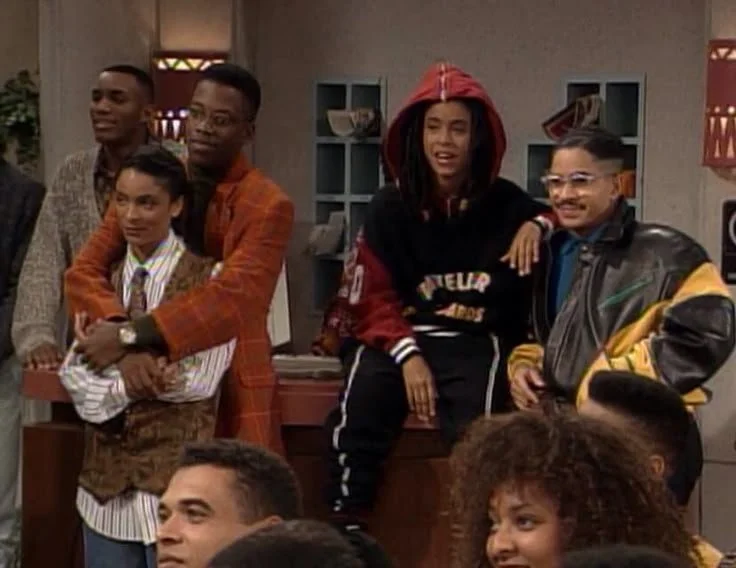
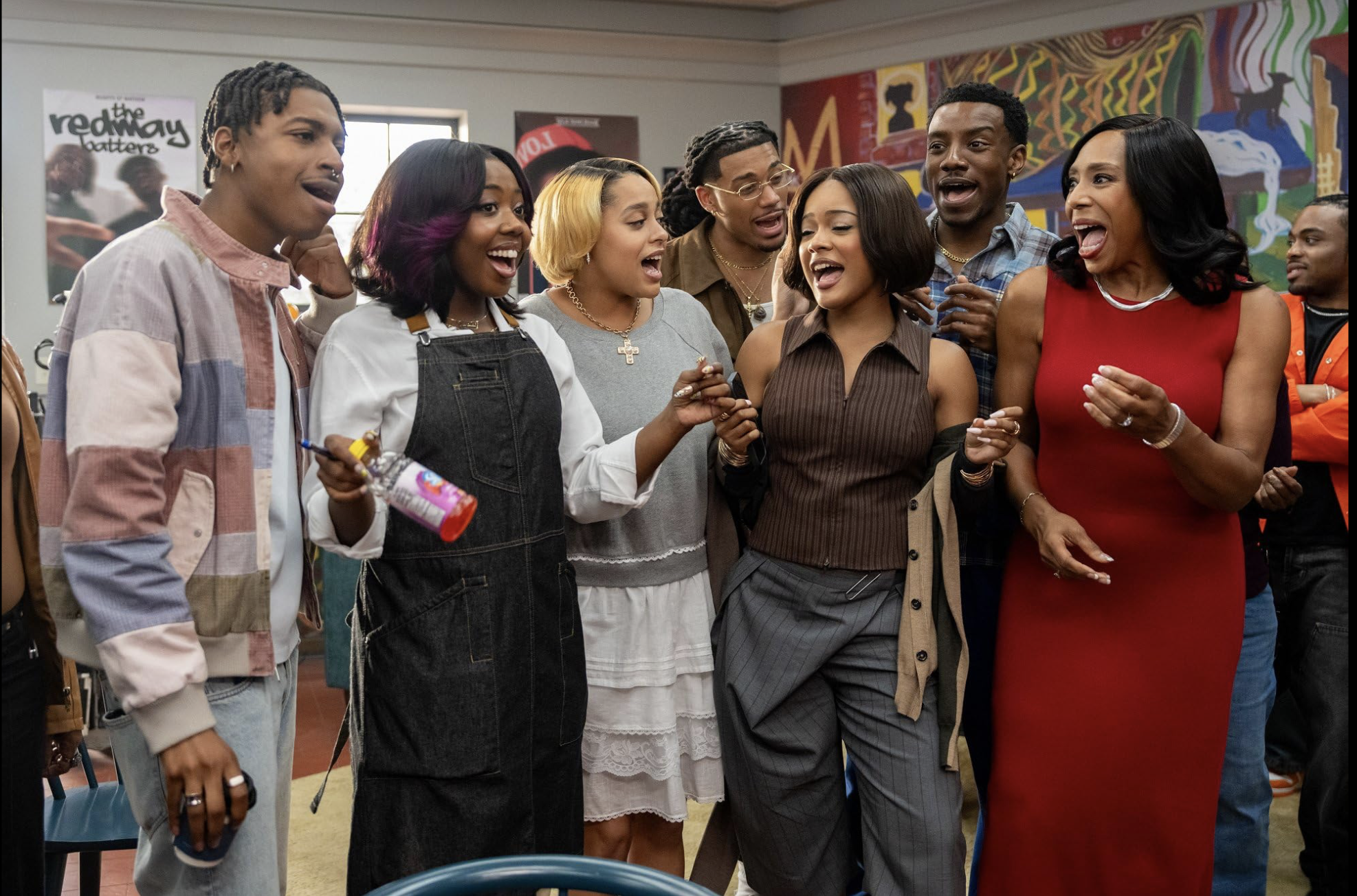
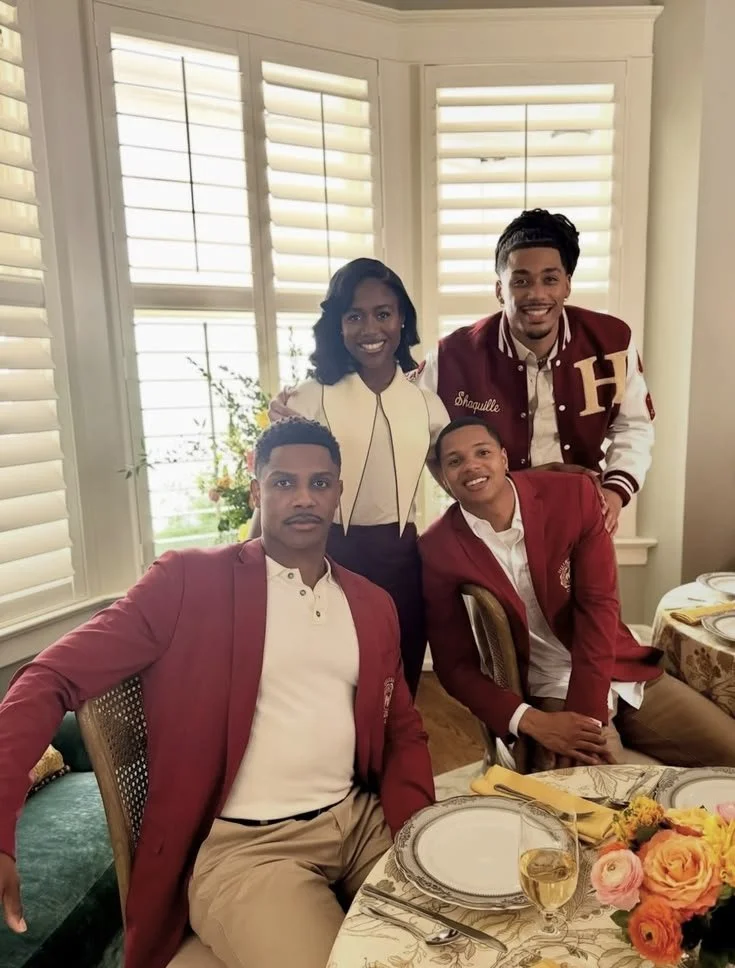
Images courtesy of NBC, Netflix, & cast.
My strongest season 2 wish is for the clothes to keep tracking with the character arcs: thoughtful repetition, clear focal points, and details specific to the person wearing them. The interviews and original content by Showrunner Felicia Pride, Costume Designer Provi Fulp, Hair Department Head Derek J, and Makeup Department Head Denise Tunnell all added so much color to the intentionality behind each character’s look.
Congratulations to Felicia, Provi, Derek, Denise, and their teams on the renewal. Dressing an ensemble is work; building the complete visual life of a campus with such a big legacy takes many hands. The costume, hair, and makeup departments all deserve their flowers.
And Provi, like I said on socials, if season two needs another pair of hands: hey, girl.
Which Season 1 look helped you better understand a character from the legacy classes or the new class? Let us know, and while you’re here explore costume design at Taylor’d by Tay Angèle, where character, context, and details tell the story before a word is spoken.